


One of the best parts of living in Boise is everywhere you can get to from it. They say Boise is the most geographically isolated metropolitan area in the country. But that “isolation” is one of the things that makes it so freaking cool. Drive a few hours in any direction and you’re completely immersed in nature: floating a remote whitewater river, hiking to an alpine lake, camping out under the stars in the mountains, backpacking a river gorge deeper than the Grand Canyon.
Whether you consider yourself outdoorsy or not, the natural beauty of our state is worth paying attention to. The reality is that places don’t stay wild anymore without people deciding to protect them. That’s exactly what The Nature Conservancy (TNC) has been doing in Idaho for the last 60 years. The Nature Conservancy is a global conservation nonprofit that works in all 50 states and 83 countries and territories around the world. Though it operates on a global scale, TNC’s work is driven by locally-based teams rooted in the communities they serve. That locally driven approach has been part of the organization from the beginning, starting with its first land protection effort in Idaho.
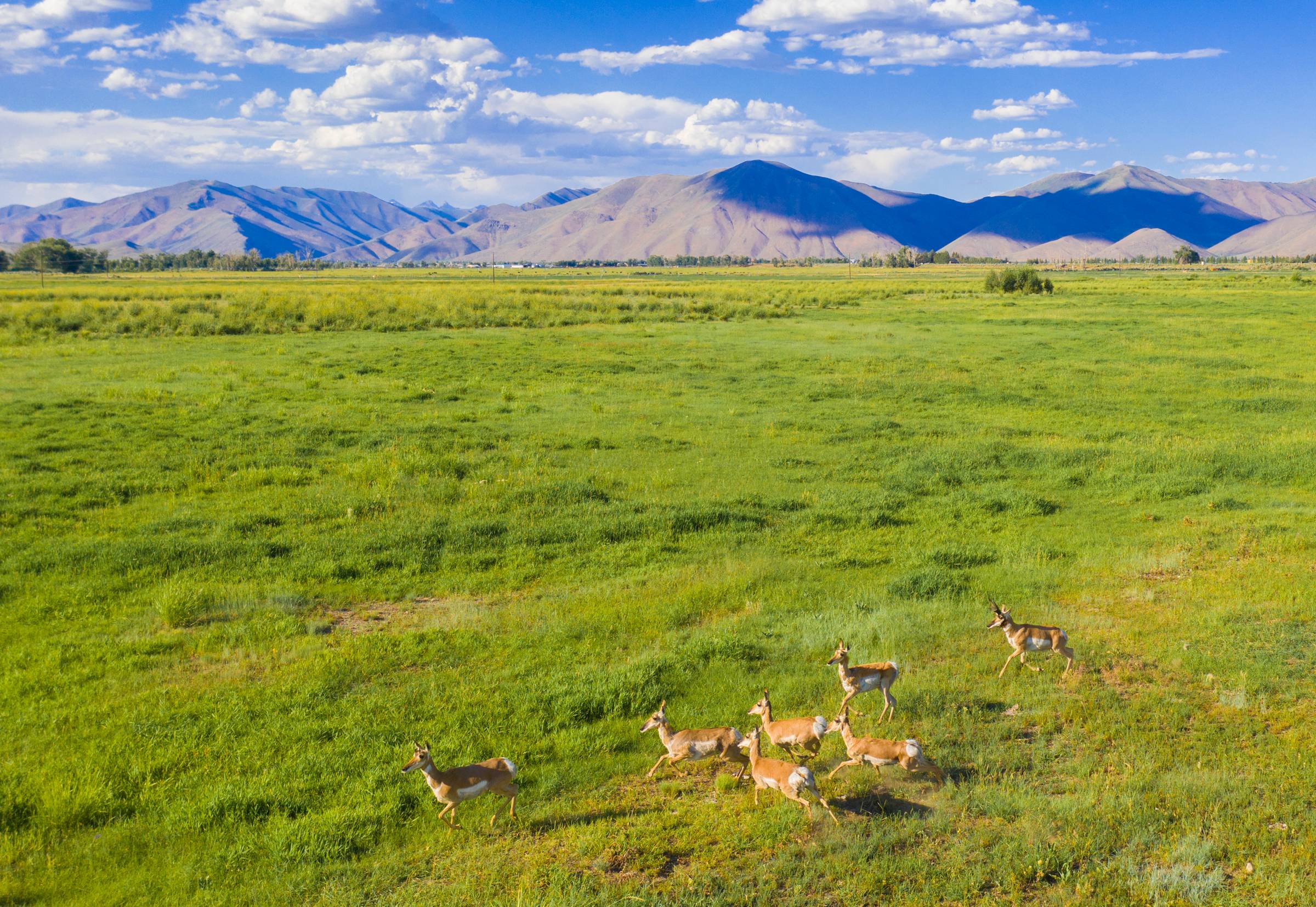
The origin
When the Idaho Chapter of TNC was established in 1965, the organization was still young nationally and essentially nonexistent locally. The new Idaho Chapter was a handful of volunteers with science backgrounds and a commitment to protect wild spaces from development. These early years resulted in helping protect some of the most iconic places in the state, like Craters of the Moon, the Snake River, the Sawtooth Valley, the Middle Fork of the Salmon River, and more. But the very first project in Idaho was Idler’s Rest.
Idler’s Rest is a 35-acre grove of old-growth cedar trees on the forested fringe of the Palouse Prairie outside Moscow, Idaho. The grove stayed 10 degrees cooler than everything around it through the summer heat, and locals had been picnicking and wandering its trails for decades. When it went on the market, a group of Moscow residents mobilized to protect it. They rallied local Boy Scouts and other organizations, including The Nature Conservancy. Together, they successfully raised $7,000 to buy the 35-acre site. It was a small project, but it became TNC’s first public nature preserve in Idaho and the beginning of six decades of conservation work across the state. The preserve, now managed by the Palouse Land Trust, remains a favorite natural refuge for the Moscow community.
From the start, TNC’s approach was less about advocacy and more about action. They acquire land. They partner with private landowners through conservation easements that keep working lands working while permanently protecting its ecological value. They work with government agencies, ranchers, farmers, and Tribes. Over six decades, that approach has produced land and water protection projects totaling over 460,000 acres spanning every part of Idaho.
The Places
The best way to understand what 60 years of conservation work actually looks like is to see it on the ground. Here’s a few places that would look a whole lot different without TNC:
Silver Creek Preserve is a gorgeous, unusual stream about 30 miles south of Sun Valley. The creek is spring-fed and alkaline. These conditions produce an extraordinary density of aquatic insects, which in turn feed some of the biggest wild trout in the West. Ernest Hemingway wrote to his son about it in 1939: “There’s a stream called Silver Creek where we shoot ducks from canoe. Saw more big trout rising than I’ve ever seen.“
Silver Creek also draws 150 species of birds and supports moose, fox, mule deer, and elk in its streamside forests. When TNC decided to buy the property in 1976, it spurred one of the largest fundraising campaigns the organization had ever undertaken west of the Mississippi. Silver Creek has been a flagship preserve in Idaho ever since. It’s also where TNC showed that large-scale spring creek restoration was possible, making it a showcase and demonstration site for stream restoration across the arid West.
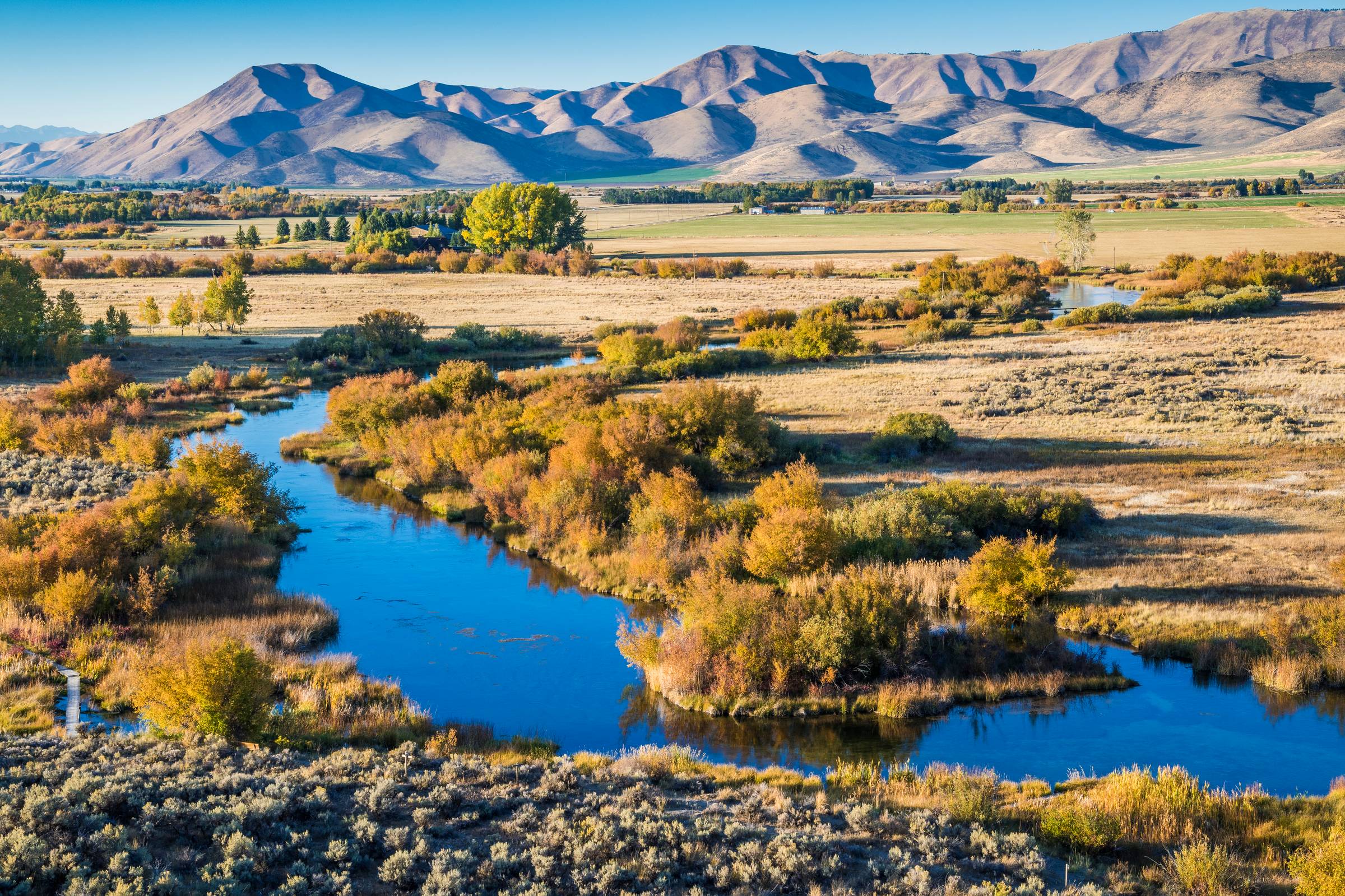
It also changed everything that came next. “Silver Creek remains this really vital community place that has helped power the [Idaho] chapter of TNC. The support raised by the love of Silver Creek really helped TNC expand,” said Will Whelan, retired government relations director for TNC in Idaho and author of the new book, Connected by Nature: Sixty Years of The Nature Conservancy in Idaho. “What happened next was TNC started getting calls from around the state — people saying, ‘Hey, I hear there’s this group that saved this cool place called Silver Creek, could they do it here?’ The reputation of TNC as a highly competent, business-savvy conservation group that could come in, raise money, acquire land, work with government agencies, and make something happen – that grew from the Silver Creek project.”
That is precisely what led TNC to Thousand Springs in Southern Idaho.
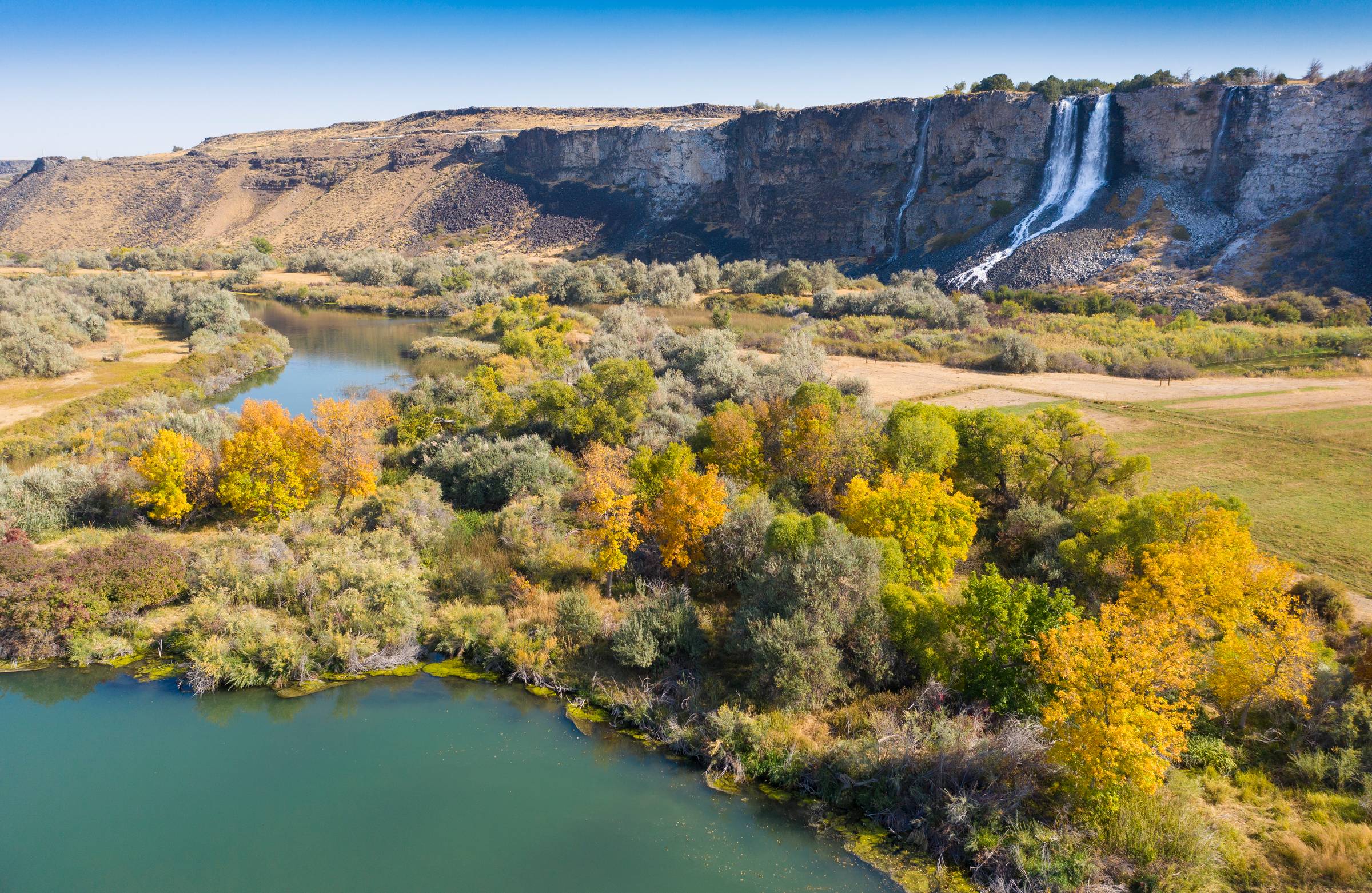
Thousand Springs tells a different story — one about what almost disappeared. About an hour and a half from Boise, the Hagerman Valley stretch of the Snake River sits above one of the great subterranean bodies of water in North America: the Eastern Snake River Plain Aquifer. This aquifer holds roughly as much water as Lake Erie beneath 10,000 square miles of desert and farmland. For millennia, that water pushed to the surface in a spectacular series of connected waterfalls and cold springs along the canyon walls. Many of those original springs were diverted for hydropower in 1912. What remained was increasingly at risk.
After the success of Silver Creek, word spread that TNC was interested in protecting places with exceptional conservation value. In 1984, a local landowner named Nancy Ritter reached out. Her family owned a 385-acre dairy farm in the Hagerman Valley called Thousand Springs Farm, and she hoped TNC could save it. When TNC’s then-Executive Director, Guy Bonnivier, showed up to take a look, he was astonished by what he saw. The farm sat on an island in the middle of the Snake River, with a massive 200-foot-wide waterfall erupting straight out of the canyon wall above it, cascading down through vegetation and over rock into a crystal clear channel below. Plants like watercress and veronica were thriving here, which can only do so in exceptionally clean water. On the other side of the island, the Snake ran murky and green. The contrast was stark, and Bonnivier immediately understood how incredible this place was.
TNC stepped in and acquired Thousand Springs Farm in 1986, helping preserve one of the last intact sections of this remarkable aquatic ecosystem. Eventually the property was donated to the State of Idaho in what remains one of the largest such gifts in state history. It’s now Thousand Springs State Park and a destination for paddleboarding, kayaking, fishing, hiking, and camping.
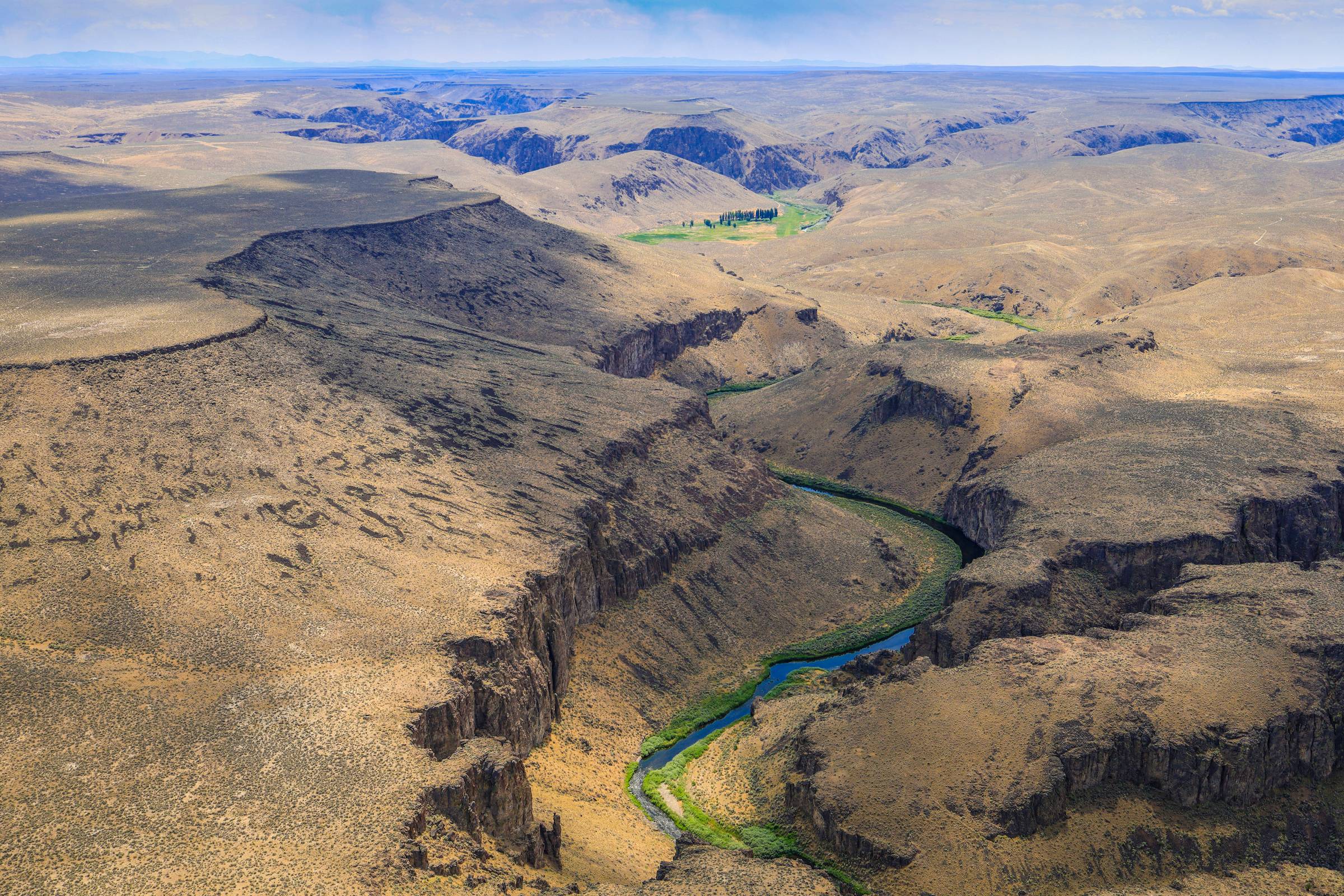
Hells Canyon is North America’s deepest canyon – nearly 2,000 feet deeper than the Grand Canyon – carved by the Snake River through a high basalt plateau and two mountain ranges over millions of years.
TNC took an early interest in Hells Canyon. In 1978, TNC helped the Idaho Department of Fish and Game acquire the 17,000-acre Prince Ranch upstream of Lewiston. This was an early step in assembling what would become a sprawling wildlife management area along the eastern rim. A few years later, a routine paperwork discovery led TNC to a nearly 6,000-acre property called Garden Creek Ranch, sitting at the point where the borders of Idaho, Oregon, and Washington meet. The ranch headquarters were the last human-built structures on the Idaho side of the Snake River for the next 40 miles upstream.
Biological surveys confirmed what TNC suspected: the area was a biological hotspot, with up to 1,000 species of plants and 350 species of wildlife. The elevation range alone — from under 1,000 feet at river level to over 5,000 feet at the canyon rim — packed moist forest, native grassland, and hot desert habitat into a single landscape which allows bighorn sheep, mule deer, and elk to migrate freely between winter and summer range. TNC kept the property, eventually expanding it to nearly 12,000 acres, and worked with the IDFG and BLM to build a cooperative management area that now encompasses 124,000 acres. It’s one of the largest wildlife management areas in Idaho.
And then there’s the Owyhee Canyonlands, just south of Boise. The Nature Conservancy’s work started with a 240-acre ranch purchase in 1996 on the South Fork of the Owyhee River. TNC’s acquisition of the 45 Ranch, which is 45 miles from the nearest highway in some of the most remote land in the country, was the first step in what became a decade-long effort to forge an unlikely coalition. Ranchers, conservationists, the Shoshone-Paiute Tribes, the Air Force, and more than a dozen other stakeholders eventually came together under what became known as the Owyhee Initiative.
Eight years of hard conversations produced landmark federal legislation, signed in 2009 by President Obama, that designated 500,000 acres of wilderness. It was the first wilderness bill in Idaho in nearly 30 years. “It included a complex set of trade-offs and agreements and ways in which the ranching community would benefit, ways in which the conservation community would benefit, and, strikingly, it produced these relationships across political and cultural divides that proved highly resilient to all of the pressures,” said Will.
The 45 Ranch and its surrounding canyons remain one of the most intact desert river ecosystems in the American West.
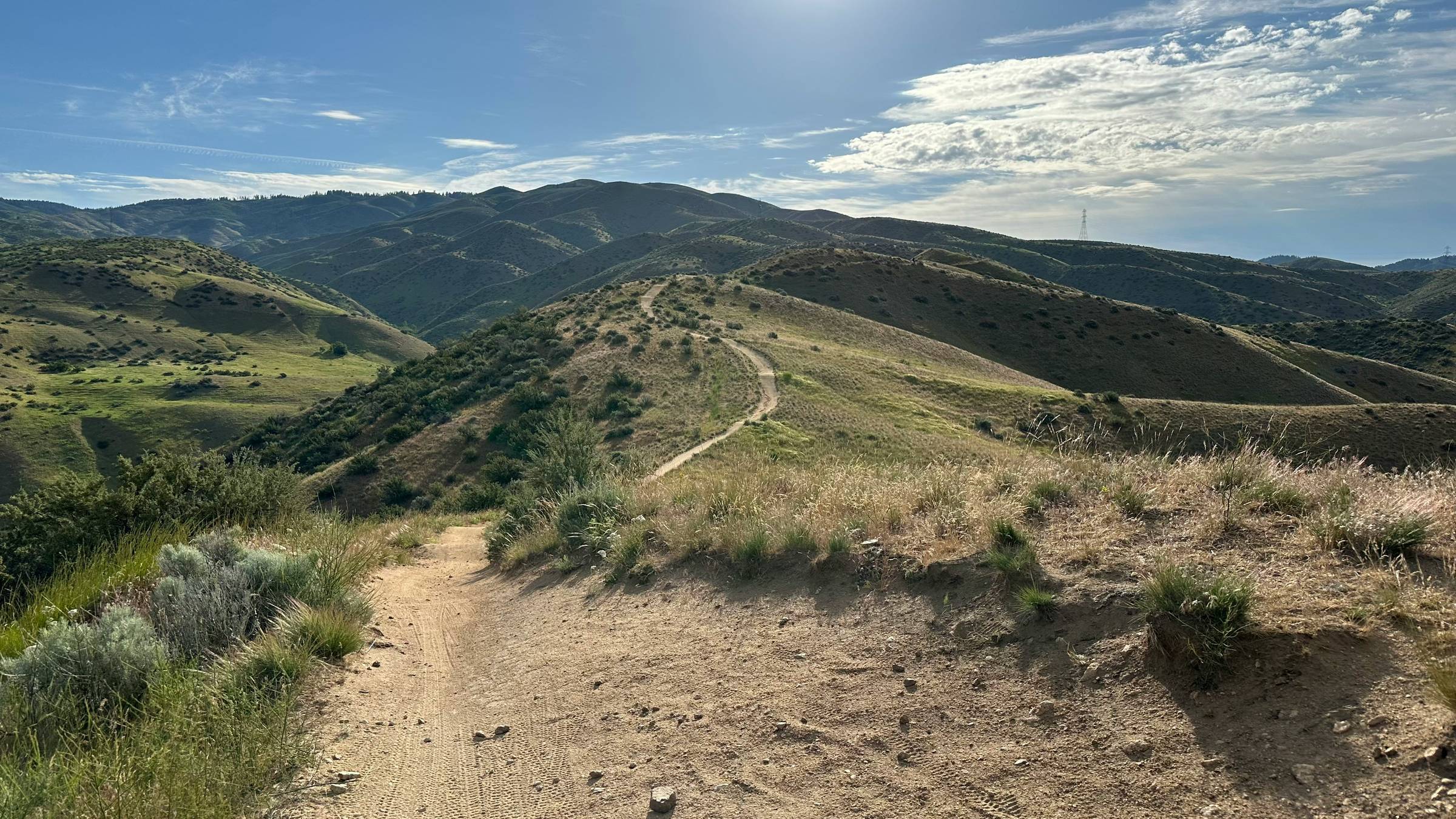
When you live in the Treasure Valley, the Boise Foothills are just part of the view. But that view would look a whole lot different if it wasn’t for generations of conservationists working to protect it. The Boise Foothills have over 200 miles of trails and support more than a million recreational visits a year. Less visibly, it’s also home to 200 species of birds and Idaho’s largest wintering mule deer herd. TNC has been part of the coalition working to protect this area since the early 1990s, supporting land acquisitions, helping facilitate a complex land exchange that kept state-owned foothills parcels out of developers’ hands, and backing the City of Boise conservation levies that have collectively put tens of millions of dollars toward protecting open space.
The Work Today
TNC’s mission has evolved over the years. Today, their mission explains their work plainly: conserve the lands and waters on which all life depends. This evolution has involved a shift from the protection of individual properties to whole, complex, and interconnected landscapes. What has not changed is TNC’s approach, with a focus on bringing diverse people together around shared values and conservation goals.The work happening in Idaho right now is built on partnerships, including with the people who work this land every day.
Agriculture is a pillar of Idaho’s economy and way of life. TNC’s regenerative agriculture program works directly with Idaho farmers to transition away from practices that deplete soil health toward practices that build it back up. One of their partners, Blake Matthews, farms 2,500 acres near Oakley using cover crops and reduced tillage. When he started tracking his soil’s organic carbon levels in 2016, they measured 80 parts per million. It was dry, dusty, and pretty lifeless. By 2024, the same soil tested at 300 parts per million, rich and alive. Matthews has since eliminated fungicides and soil fumigants, drastically reduced synthetic fertilizers, and is using less irrigation water. TNC’s approach: demonstrate the economic and ecological benefits of these farming practices , peer-to-peer, within agricultural communities, where producers can see results with their own eyes.

The same spirit of working with, not around or against, landowners runs through TNC’s salmon restoration work in the Upper Salmon Basin. When rancher Glenn Elzinga agreed to close an irrigation ditch that had been diverting water away from Big Springs Creek for decades, nobody was sure what would happen. Within the first year, cold, clean spring water flowed freely through the creek again — and Chinook salmon showed up almost immediately to spawn. As Will writes in Connected by Nature: “Glenn Elzinga took his daughters down to Big Springs Creek that first year to see the fish splashing in the shallow, clear water as they excavated their redds. His kids gazed in astonishment at the spectacle. He recalled: ‘There was silence. There were no words. There was just the rightness of the thing.’”
On the forest side, TNC is partnering with the U.S. Forest Service across Idaho’s seven national forests to address what more than a century of fire suppression has created: forests that are denser, more fuel-loaded, and more vulnerable to catastrophic wildfire than at any point in modern history. TNC’s Forest and Fire program uses prescribed burns to mimic the natural fire cycles these ecosystems evolved with, and to make the forests and the communities near them safer. TNC has about 500 fire staff and volunteers nationwide who are Red Card certified in wildland firefighting, and is the only private conservation organization that’s a member of the National Wildfire Coordinating Group.
As Will puts it: “We live in a world of economic systems and relationships between humans and nature that would benefit from greater awareness of the natural systems on which we depend.”
The Book
To mark the 60th anniversary, Will Whelan wrote Connected by Nature: Sixty Years of The Nature Conservancy in Idaho. Will worked for 18 years as The Nature Conservancy’s government relations director in Idaho and prior to that spent over a decade with the Idaho Attorney General’s office. He sifted through hundreds of archival documents, decades of photographs, and conducted dozens of interviews. The book is a fascinating read and covers all of the places, the people, the hard-won coalitions, and the moments where things could easily have gone the other way.
“If there’s something I hope people take from this book, it is that passion for conservation and appreciation for the natural world can lead people to make an amazing difference,” said Will. “And the satisfaction that they can derive from that can be some of the most rewarding experiences in their lives.”
The digital version is free. Download it here.
The Celebration
On June 30, Will Whelan will present the book and stories of TNC’s 60 years in Idaho at The Community Library in Ketchum. He plans to share vivid stories of the people, places and pivotal moments that have shaped conservation across the state. The free event is open in person and virtually, so if you’re not making the trip to the Wood River Valley, you can still tune in from your couch in Boise. More info here.
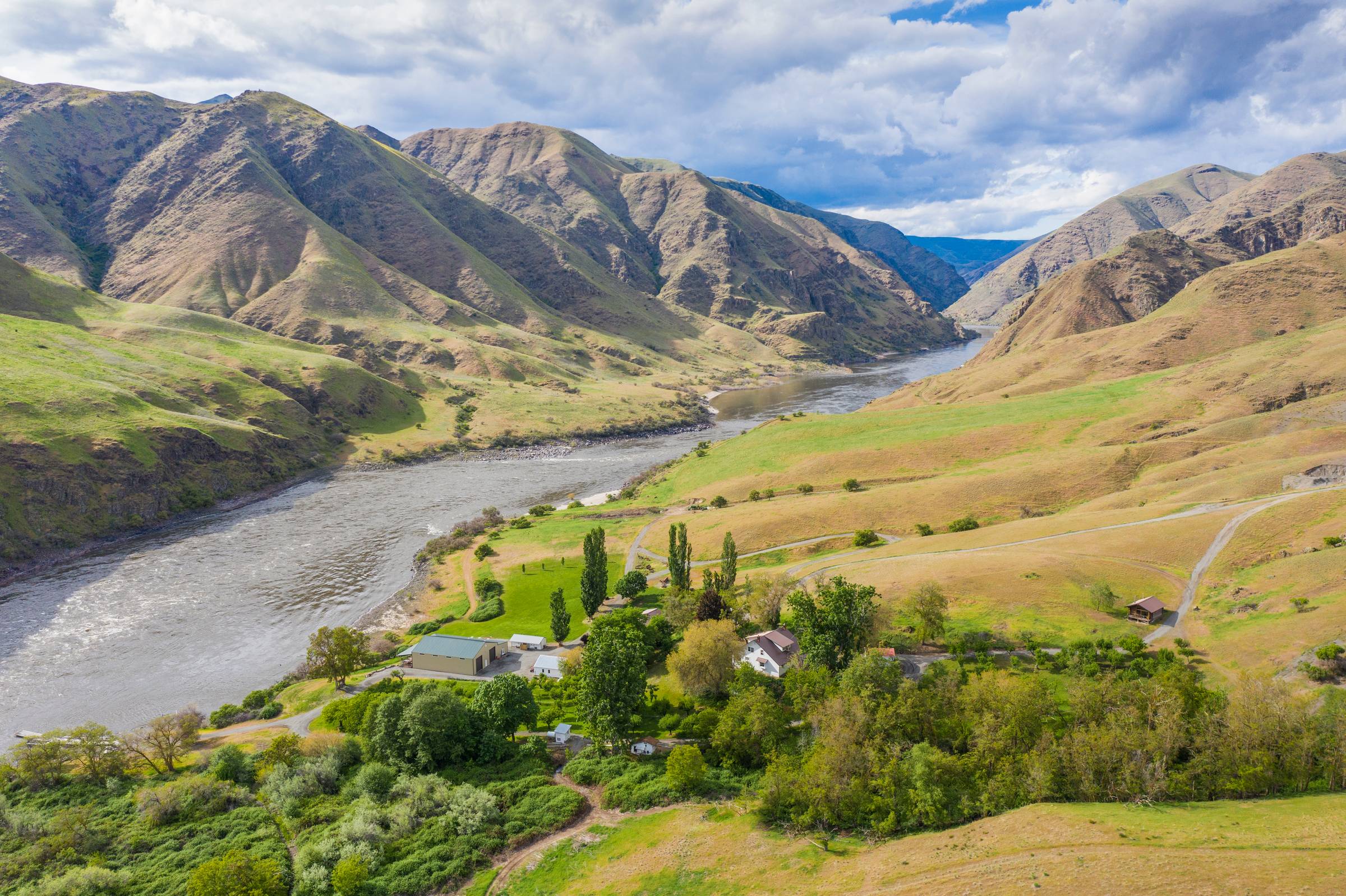
Idaho is one of the most naturally spectacular places in the country. The rivers, the canyons, the wide open spaces you can reach in an hour from your home in Boise. None of this should be taken for granted. It’s the result of decisions made over six decades by people who cared enough to show up and do the work.
“We benefit from the efforts, contributions, and the sweat of conservationists over time,” said Will. “Each successive generation, in my view, has a responsibility to figure out how to keep those contributions coming for the next.”
Learn more at nature.org/idaho. Thanks for reading!
With love from Boise,
Marissa
This story is sponsored by The Nature Conservancy.
If you’re interested in getting your product, service, or event in front of 25k Boise locals →book a call


