


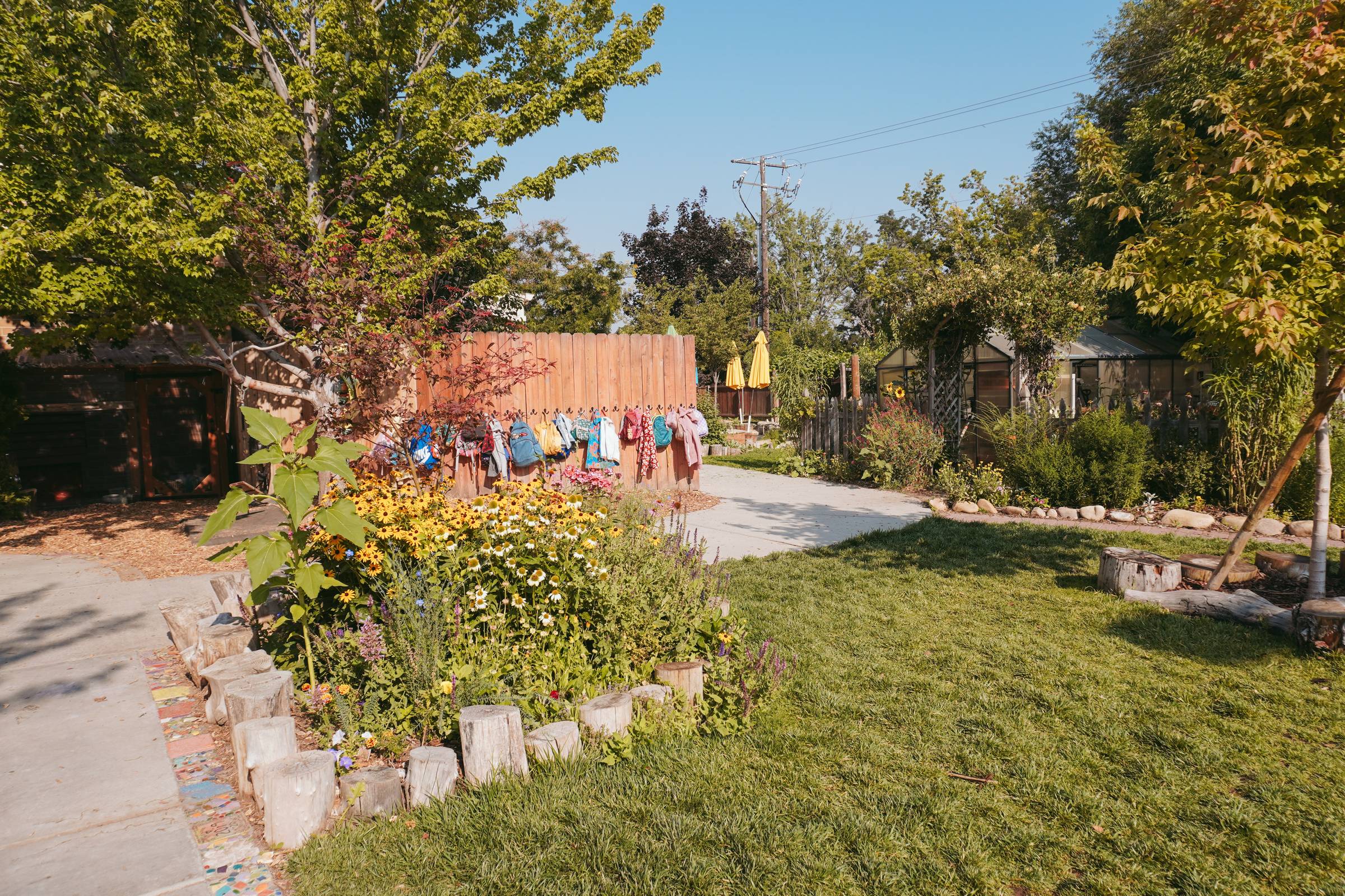
The morning I visited Lakewood Montessori, every single kid was outside. All of the swings hanging from various trees were occupied, kids were climbing all over the custom play structure, girls sat together playing with flowers from the garden. Three-year-olds putzed around the kindergartners. A group of kids filled the fenced garden area, checking over the bursting vegetables and flowers, saying good morning to the pet quails, and harvesting (and immediately eating) blackberries right off the bush. Two murals were being painted on the building by local artists that morning as well, and a few students hovered nearby chatting and watching the artist at work.
That’s Lakewood Montessori in a nutshell. It’s a preschool, but it’s also an entire ecosystem of life in one place: art, plants, animals, food, friends, and community. It’s no wonder that families have been bringing their children to Lakewood Montessori for 22 years and counting.
The beginning
Lakewood Montessori was founded in 2004 by Mary Clements and Karen Dugmore. Before founding Lakewood, they both taught in Montessori schools and spent time teaching in small Montessori programs in their homes. Between them, they have more than 50 years of Montessori classroom experience. Mary and Karen knew if they came together and found a bigger space, they could bring their vision of a Montessori school to life.
When a church on Linden Street outgrew its building, they knew they had found the perfect place. For about a year they shared the space with the congregation before fully taking over the building. Lakewood Montessori started with 32 kids and has grown to almost 130 students, ages 18 months to 6 years, with 27 teachers and staff.
What is Montessori
Montessori is a style of education developed by Dr. Maria Montessori that focuses on child-led learning, independence, and hands-on exploration. As Mary Clements, co-founder of Lakewood Montessori, says: the curriculum is on the shelf.
What sets Montessori, and specifically Lakewood Montessori, apart from other preschools and daycares is the endless opportunities for learning through independence and the way teachers interact with the kids. The teachers are remarkably hands off, even with the toddlers. This is not to say that they are not teaching or caring for the children. Rather, they are guiding the children through an activity versus telling them what to do.
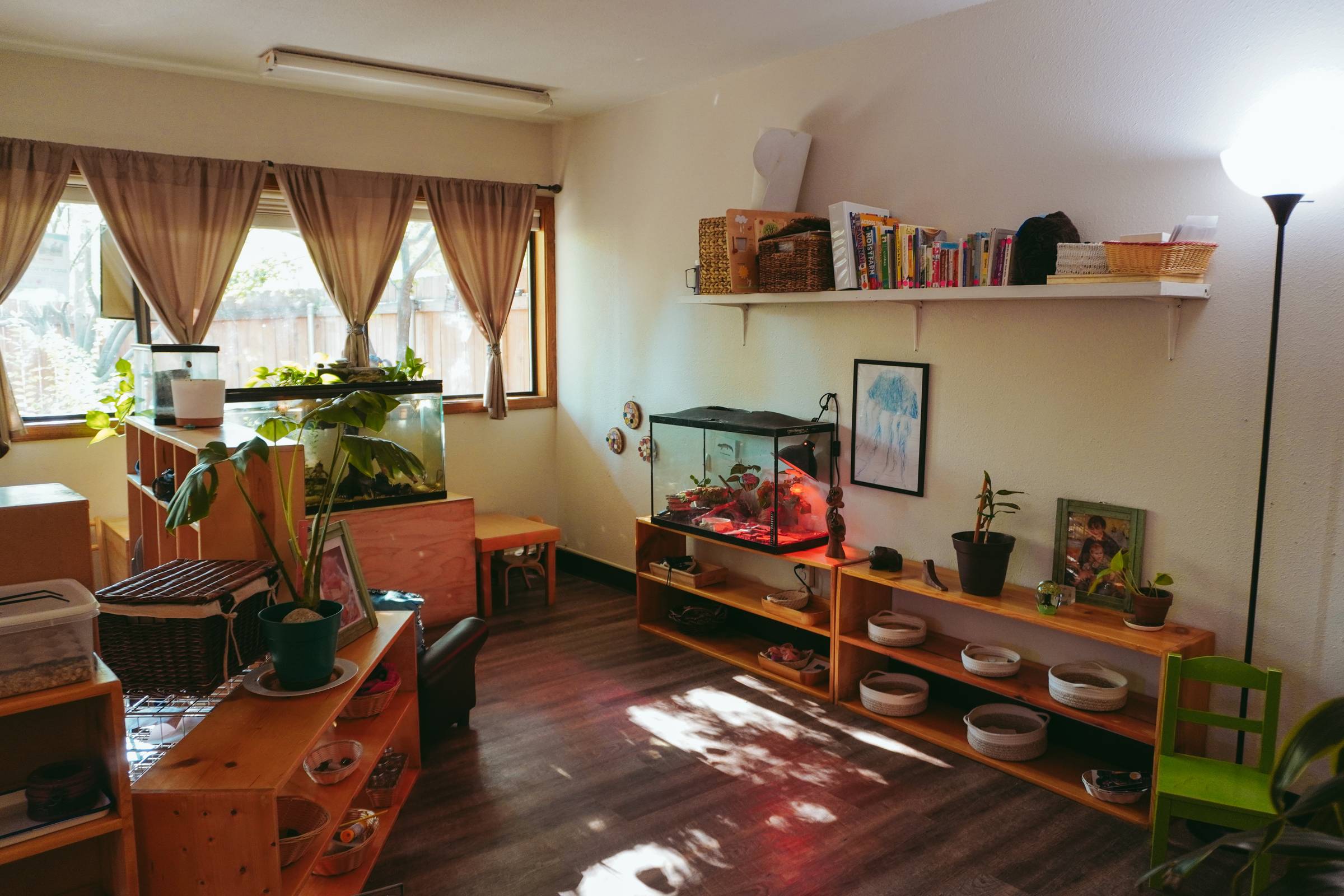
Instead of a teacher standing at the front of a room, Montessori classrooms are set up so kids choose their own work from carefully designed materials and work with their chosen activity at their own pace. A teacher is there to observe and offer the next lesson at the right moment. Mary describes it as an invitation, not an assignment. A teacher watches a child, makes an educated guess about what they’re ready for, and asks if they’d like to try it. The kid can say yes or no.
Hands off teaching might sound easy from the outside, but it’s actually the hardest part of the job. There’s no Montessori teacher training center in Idaho, so Lakewood essentially grows its own teachers. Teachers head to certification programs in places like Denver, Portland, and Texas, then finish their training on-site with a mentor. They also train by what Montessori calls “plane of development,” meaning a teacher who works with toddlers goes through an entirely separate, in-depth training just for that age group instead of one general early-childhood credential. It’s a lot of specialized education. Lakewood is also the only school in Idaho that is accredited by the American Montessori Society – a rigorous, multi year process.
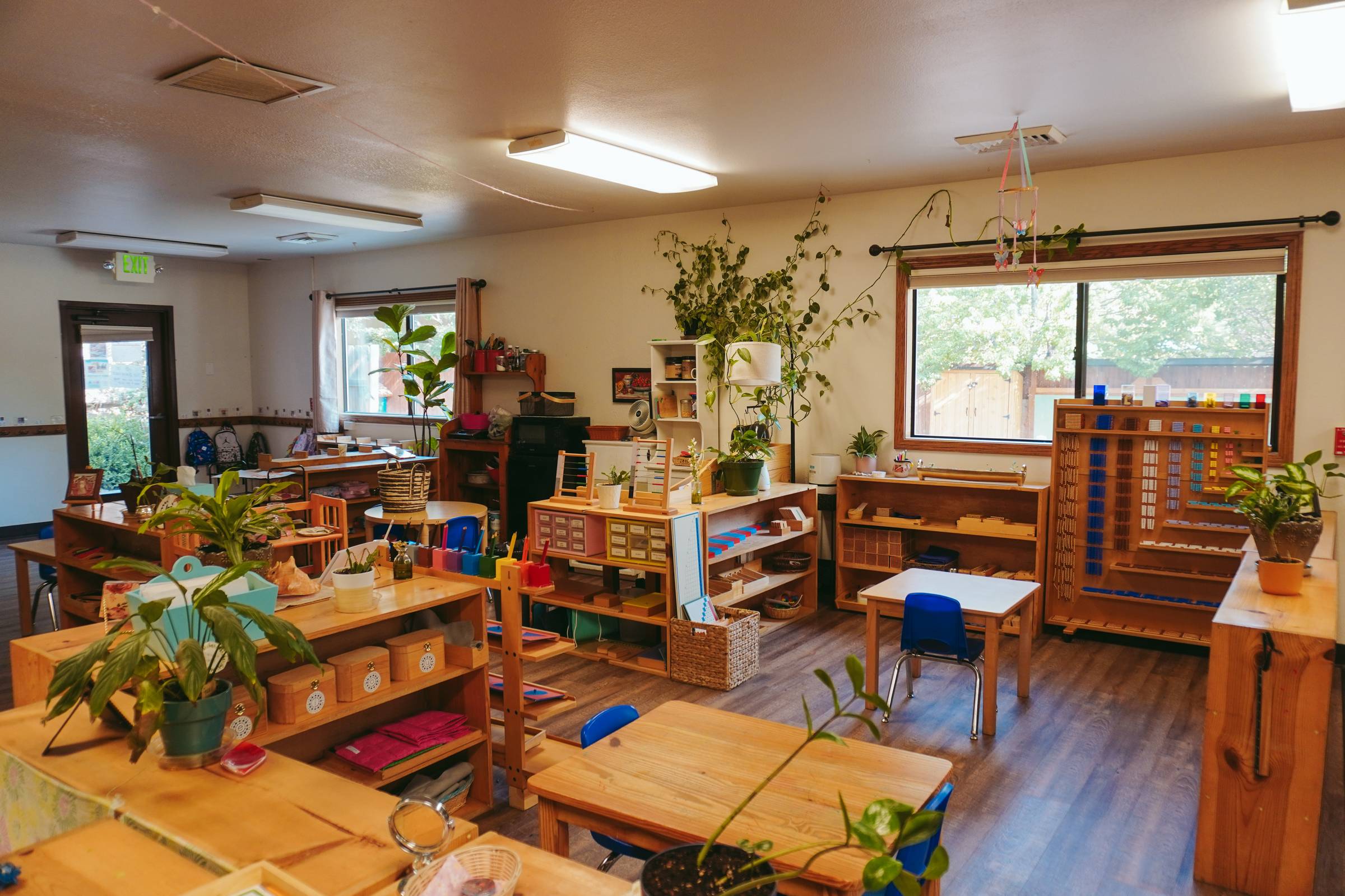
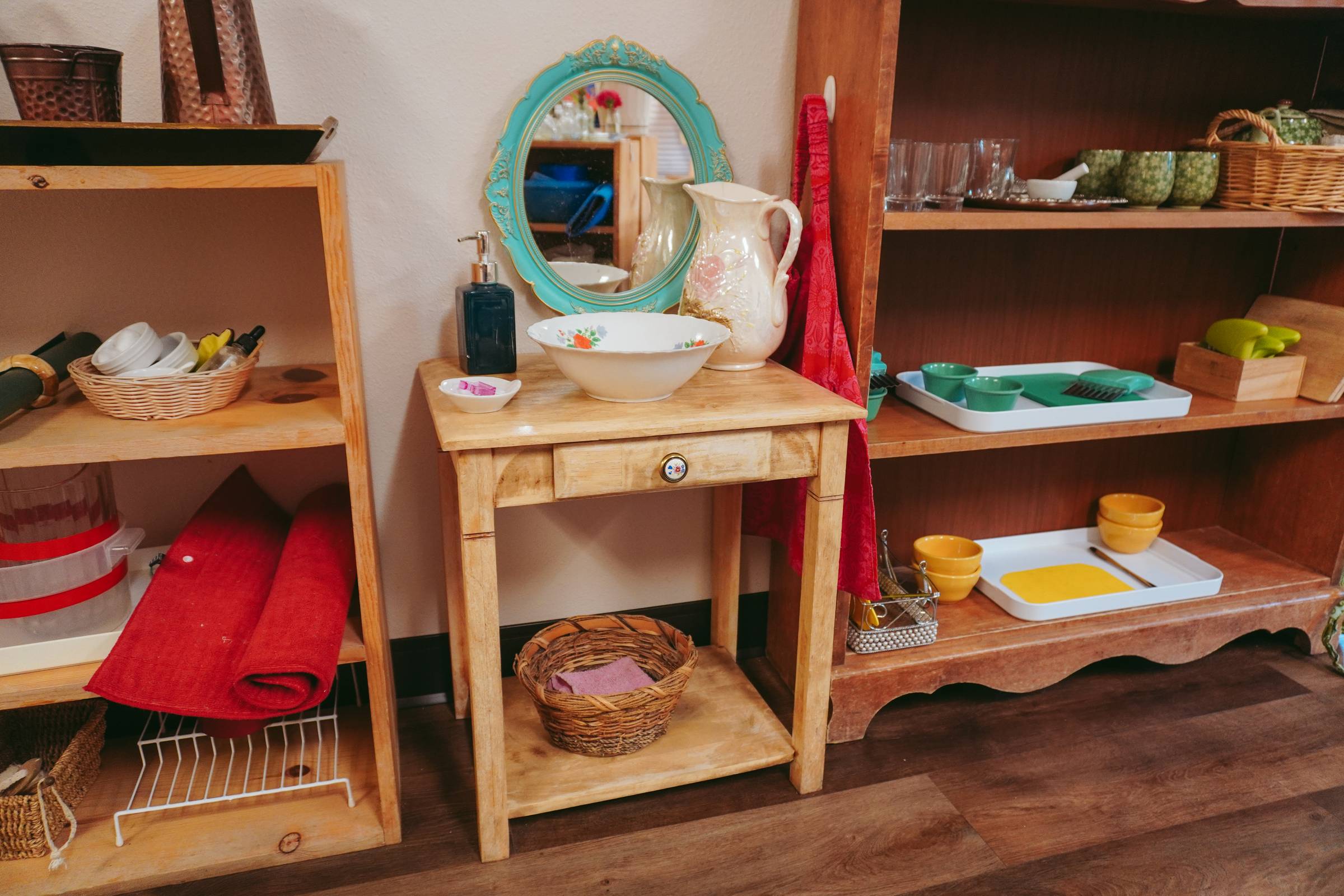
The materials available to kids are entirely hands-on. There’s “practical life” materials for skills like pouring, sweeping, getting dressed, and setting a table. There’s a sensory area full of Montessori’s signature tools like the pink tower, knobbed cylinders, and the brown stair. There’s math material that turns abstract numbers into something you can physically hold. And of course there are lots of books.
At Lakewood, they approach reading with sounds, not letter names. As Mary explains, the word “cat” isn’t C-A-T, it’s the different sounds of each letter: ka-a-t. They train the child’s ear first, and reading follows.
One of the most notable elements of a Montessori classroom is the size of everything. It’s all sized for the child. Everything needs to be accessible to them, which means all the shelves, tables, chairs, and hooks are all at child height.
Kids move through two stages at Lakewood: the toddler community is 18 months to 3 years old, and the Children’s House from about 2.5 years old through kindergarten. Mary calls kindergarten the capstone year. Instead of being the babies of the school like they would be anywhere else, kindergarteners at Lakewood are the oldest and most capable kids in the building. Kindergartners also come together a few times a week for additional Spanish, art, and science classes as well as field trips.
Lakewood runs full-day programming year-round. They are open from 8am to 5pm, Monday through Friday, but don’t have required hours of attendance. Many kids are there from 9am to 3:30pm. Some do only 4 days a week. Lakewood supports families finding a schedule that works best for them. Kids spend at least two hours outside every day, and every classroom has its own outdoor space attached to it in addition to the community outdoor space.
Art & nature
The outdoor spaces at Lakewood Montessori are truly impressive in the way they have been carefully designed for the kids and the environment. In what would’ve been an unused area in their parking lot, they’ve created a native plant strip that they call the Peaceful Path. It’s lined with pollinator plants and milkweed for monarch butterflies, and it doubles as the path kids take to carry the classroom garbage to the dumpster. There’s an active compost system, patches of grapes, raspberries, and blackberries to harvest, and a garden bursting with produce and pollinators. Lakewood’s garden coordinator, Lauren, has a master’s degree in Montessori education and now spends her days getting kids’ hands into the dirt. The goal of the garden, Mary says, is for kids to experience a plant’s whole life, seed to seed, more than once.
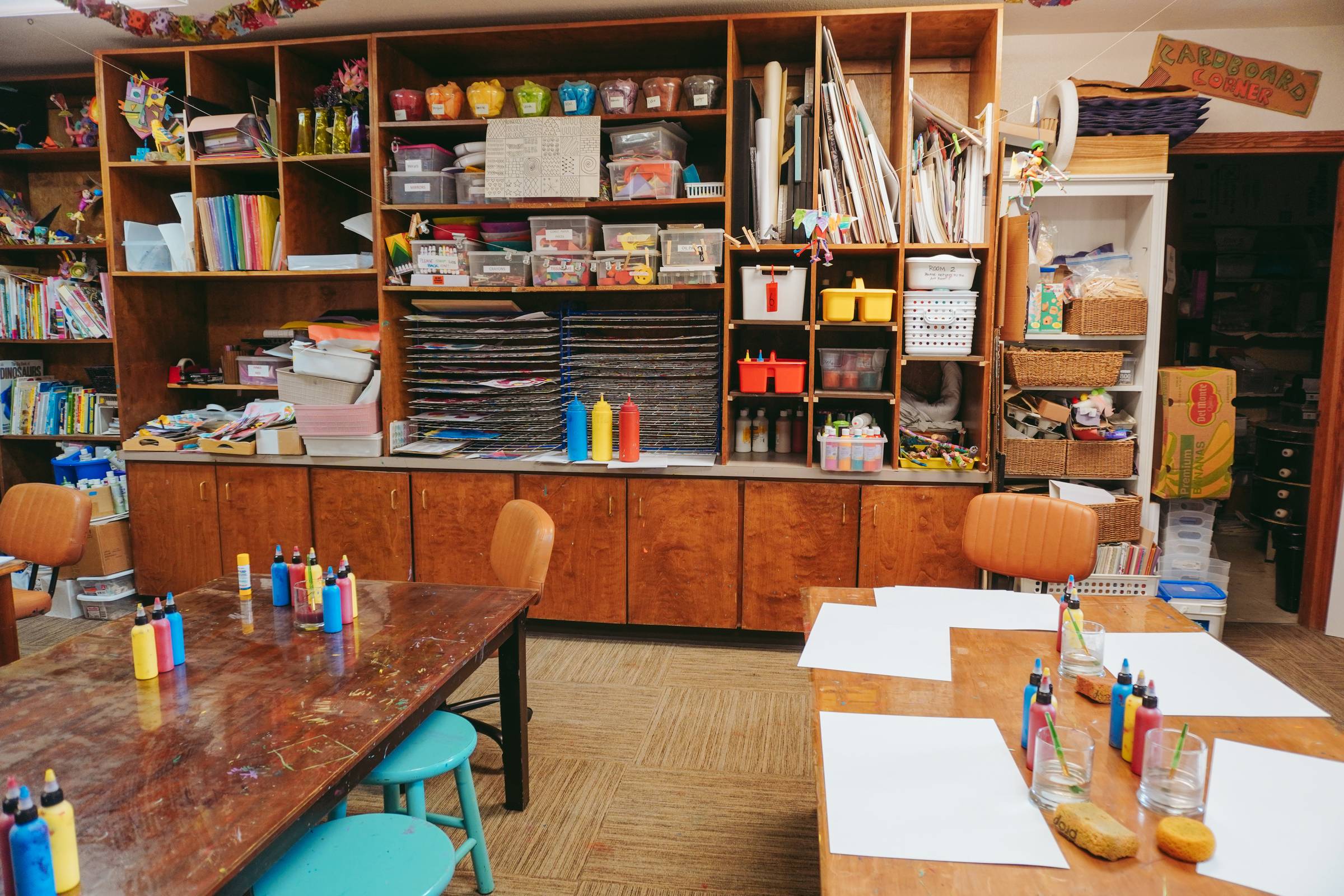
Art is another big part of the programming at Lakewood. Art is present in each classroom as part of each child’s self-chosen curriculum, alongside the usuals of reading, writing, and math. Children have many opportunities to experiment with different media, view and discuss art and artists, and form their own connection to their creative gifts. Students also have weekly classes in the Art Studio. Most early learning and elementary schools in the Treasure Valley do not have dedicated art classes. Lakewood feels strongly that children need exposure to and experiences creating art. In the Art Studio, there’s art and art supplies in literally every nook and cranny. Just like in the classroom, all of the art supplies are displayed at child height and available to them to create whatever they want. Lakewood’s art teacher, Susan, guides the students with a theme or inspiration, but children always have freedom to create their own art.
The importance of early education
“Children learn 80% of everything they’re ever going to know in their entire life before the age of six,” said Mary. It’s one of the most, if not the most, critically important periods of growth in a person’s life.
According to Idaho Education News, a child’s brain forms more than a million new neural connections every second between conception and age five, the fastest rate of development a person will ever experience. That window shapes language, social skills, and problem-solving ability for life. Kids who get high-quality early learning are significantly more likely to graduate high school and finish a bachelor’s degree, and they tend to out-earn peers who didn’t have that head start.
Knowing this makes it even more disheartening to learn that Idaho ranks near the bottom for kindergarten readiness and that families are having a harder time affording early learning opportunities for their children. The field is often treated as babysitting rather than the specialized, highly trained work it actually is. Teachers in Idaho get paid an average of $66,000 per year, and for early childhood education teachers it’s even less at about $40,000 per year on average.
This is why schools like Lakewood Montessori matter so much. Teachers at Lakewood are paid a living wage and children are taught at a high level and loved and supported by their teachers. Every dollar spent well on early childhood education tends to pay itself back many times over down the line, in kids who read better, problem-solve better, and need less intervention later.
Tours & enrollment
Lakewood Montessori accepts kids into the Toddler Community starting at 18 months and into the Children’s House starting at 30 months. Enrollment is open year-round and they have a few spaces left in the Children’s House classes for Fall 2026. It is never too early to join the wait list.
For both the Toddler Community and Children’s House, tours are the first step. The school recommends applying early since spots fill based on registration date, siblings, age, and program balance.
You can find more information on programs and enrollment at lakewood-montessori.com.
Thanks for reading!
With love from Boise,
Marissa
This story is sponsored by Lakewood Montessori
If you’re interested in getting your product, service, or event in front of 25k Boise locals → book a call


