By Dave Yasuda
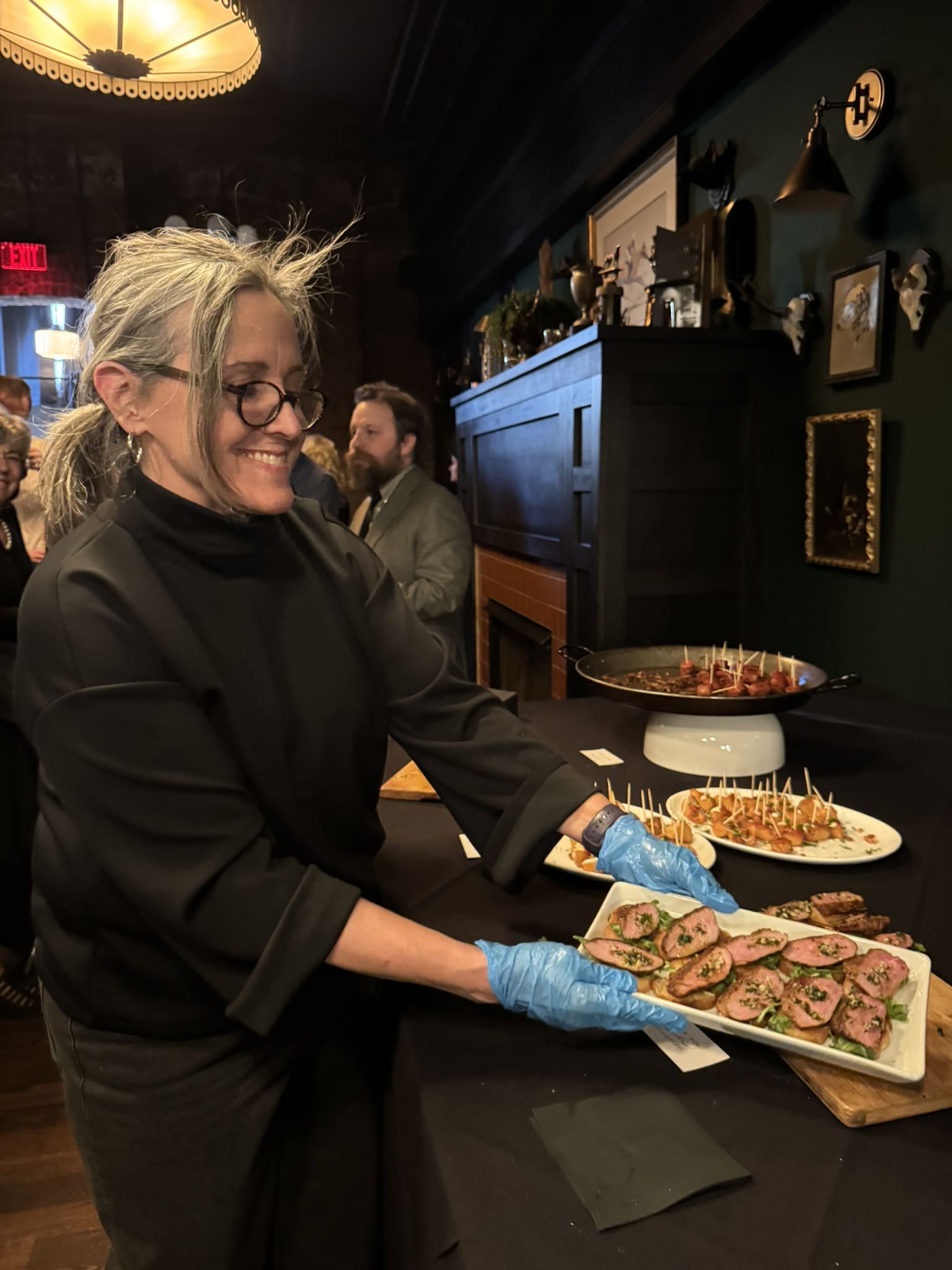
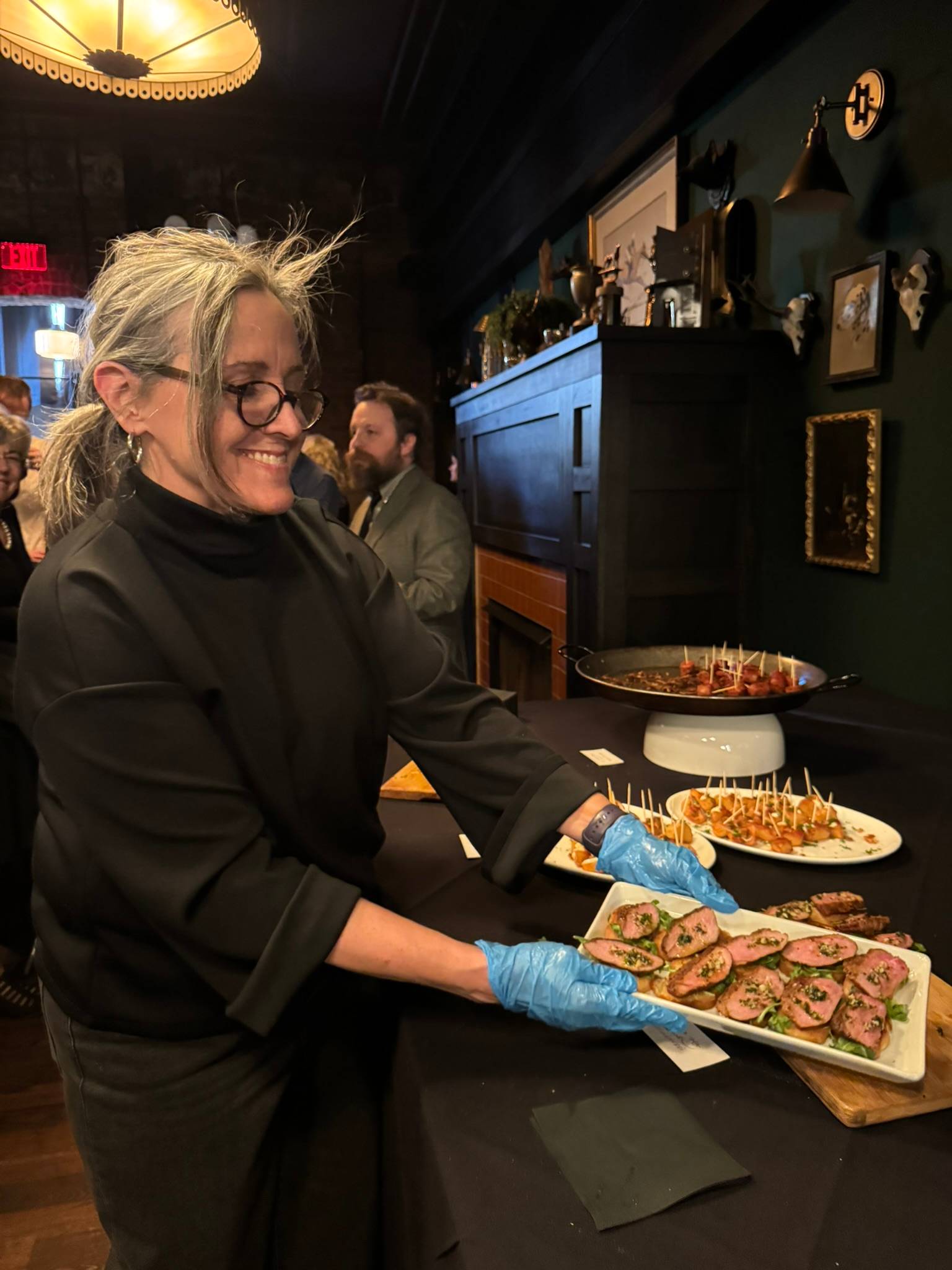
Tiner’s Alley was packed with people. Delicious bites were passed around and craft cocktails were mixed and handed out in quick order. Not an unusual scene for this popular bar, but it was 4:30 p.m. on a Sunday.
The reason for the gathering was Celebrate Boise’s Best – A James Beard Collective, presented by Ansot’s, Bar Please!, Chefs Alex Cardoza (Susina), Cal Elliott (The Avery), and Nate Whitley (Terroir). Three of the chefs are semifinalists for the 2026 James Beard Award for Best Chef: Mountain, Ansot’s is a semifinalist for Outstanding Hospitality, and Bar Please! is a semifinalist for Best New Bar.
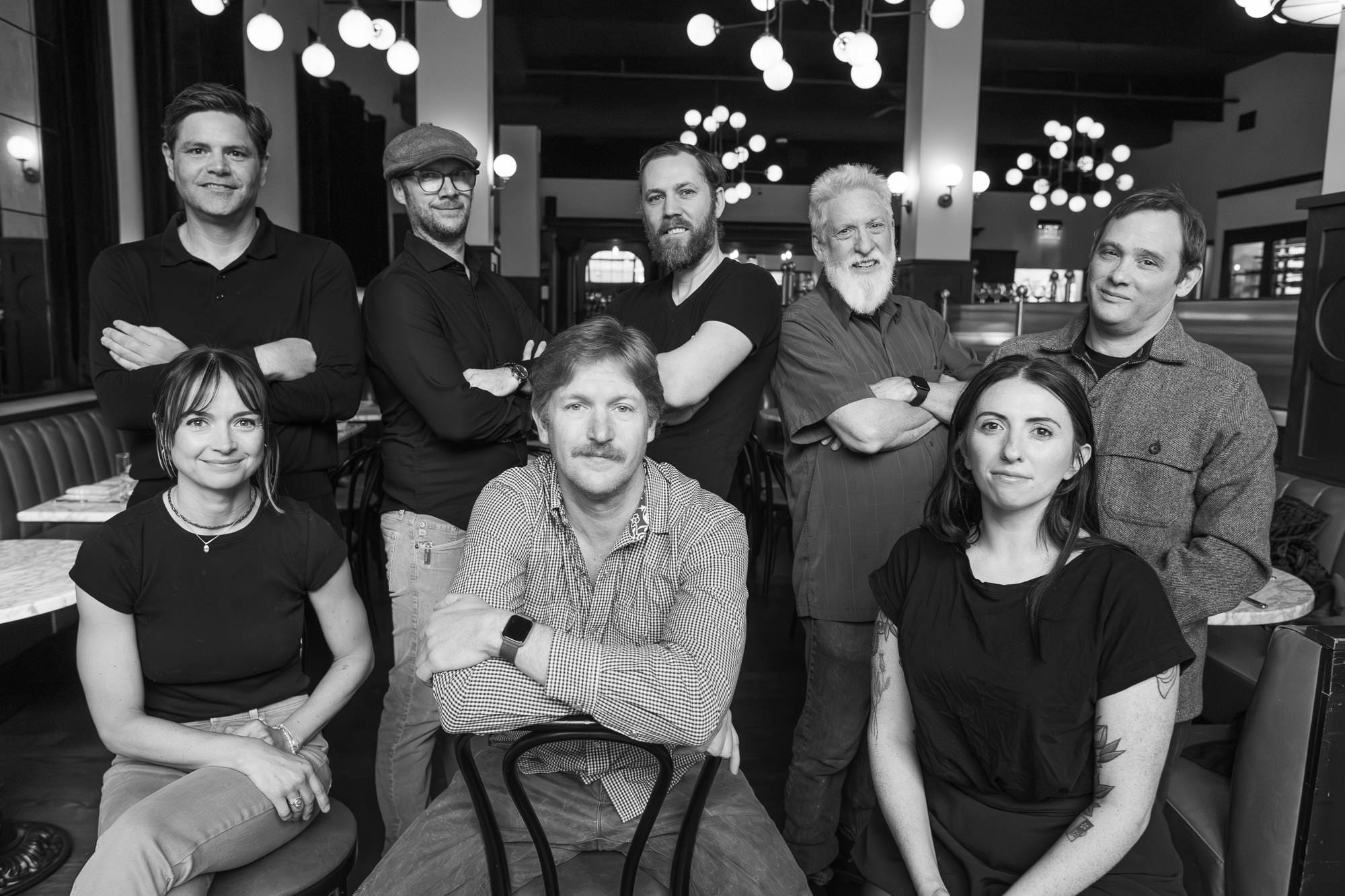
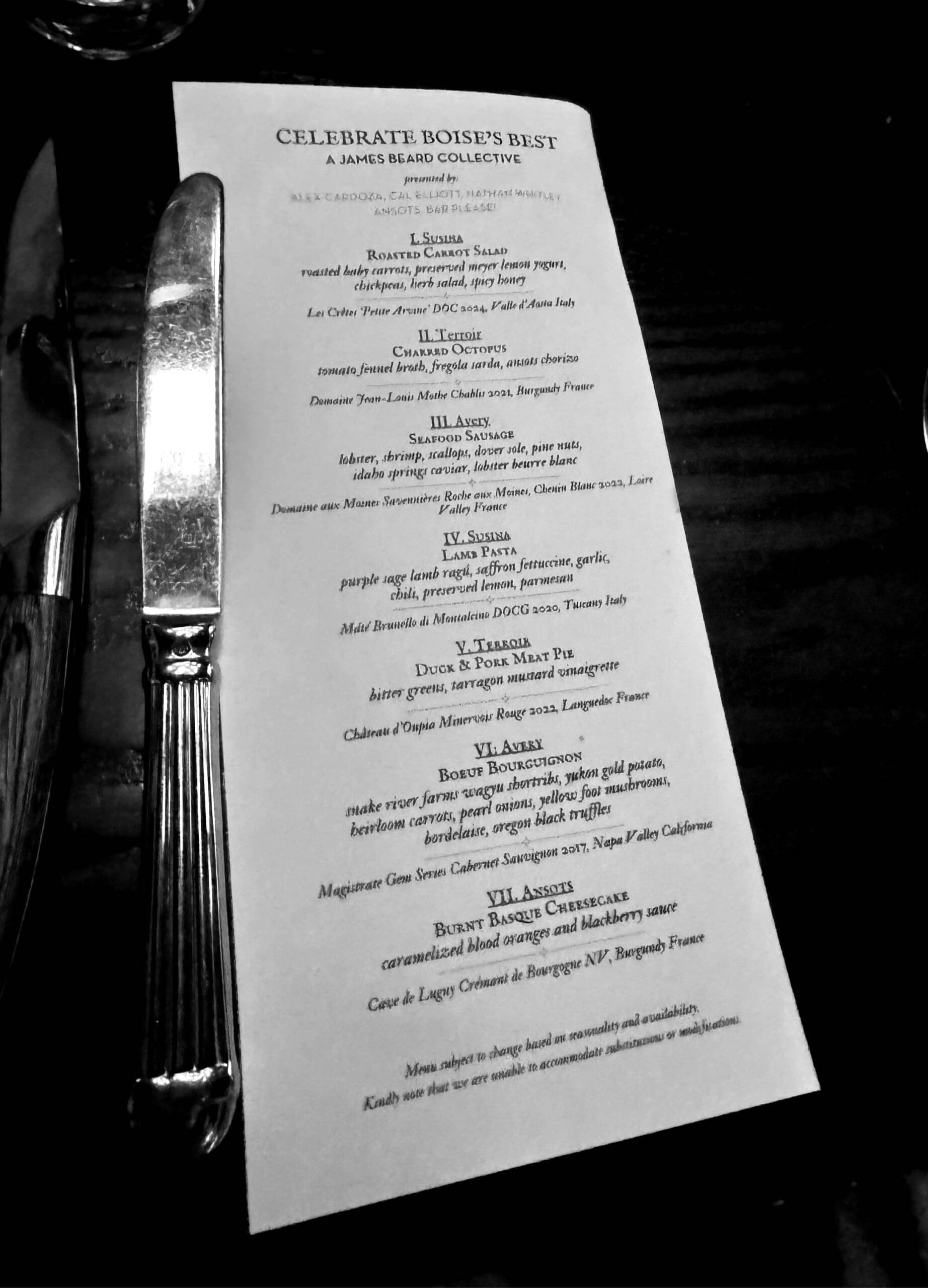
Guests started in Tiner’s Alley with Basque-inspired appetizers from Ansot’s and their choice of six special cocktails from Bar Please! The group then moved to the dining room at The Avery, where a seven-course meal with wine pairings was served.
Chef Cal Elliott came up with the idea and rallied the other nominees shortly after the semifinalist list was announced on January 21. They moved quickly to plan and host the event on February 22.
The evening was more than just a party, it felt like a milestone. A moment that reflected how far Idaho’s culinary scene has come and how it is beginning to be recognized beyond the state’s borders.
What Are the James Beard Awards?
The James Beard Awards are widely considered the highest distinction in the American restaurant and hospitality industry. Often referred to as the “Oscars of the restaurant world,” being nominated is an honor and winning is a career-defining achievement.
James Beard was a chef and cookbook author who played a major role in elevating American cuisine. Born in Portland, Oregon, he became known as “the Dean of American Cookery.” He established a cooking school, wrote influential cookbooks, and helped pioneer cooking shows on television.
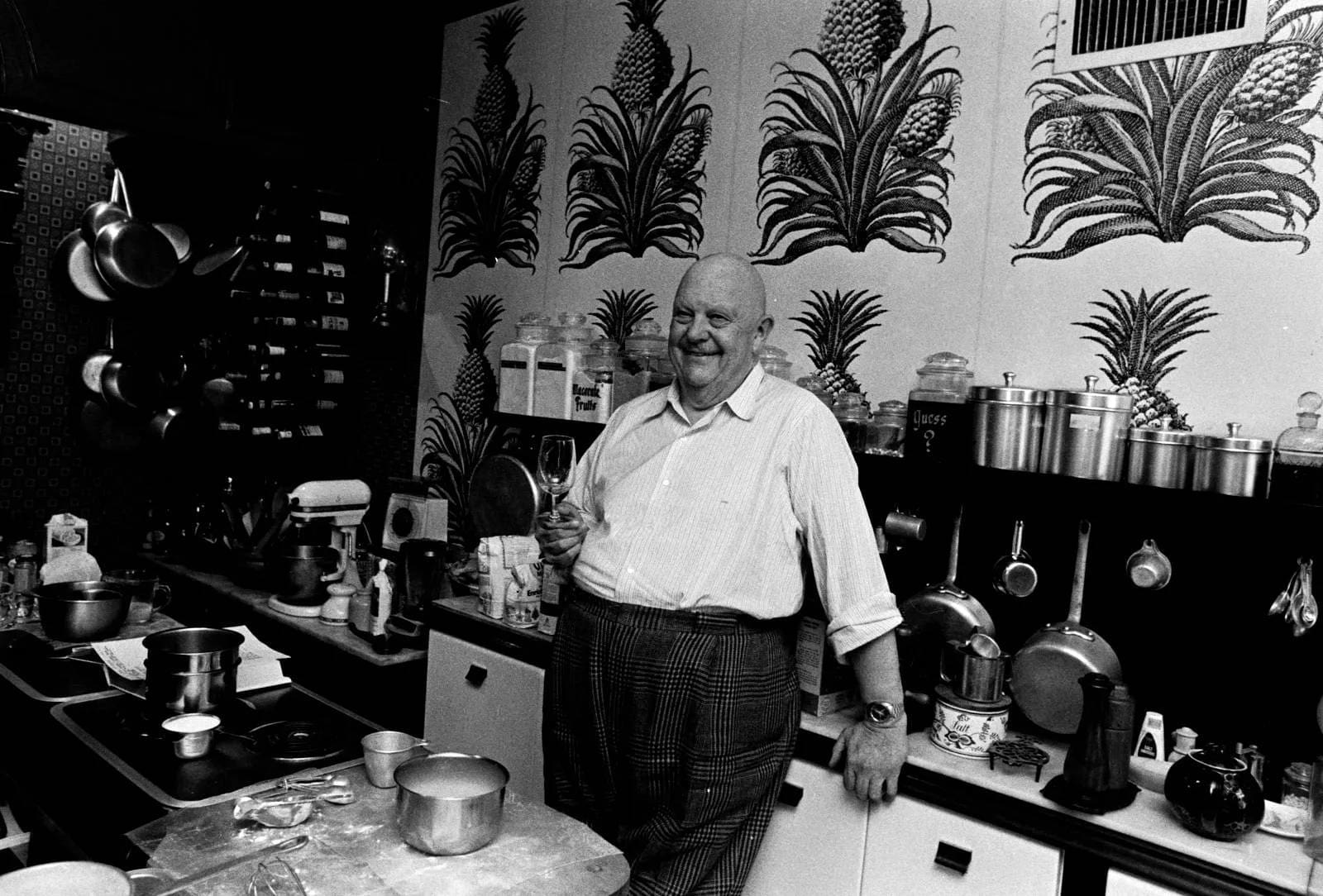
After his death in 1985, the James Beard Foundation was established to support and celebrate the culinary arts in the United States. The James Beard Awards were created in 1990.
Today there are 25 awards presented each year across national categories that recognize restaurants, chefs, bakers, and bars. Because they are judged at a national level, these awards are considered among the most prestigious honors in the industry.
The most recognized category is Best Chef, which is divided by geographic region. For the 2026 awards, there are 12 regions: California, Great Lakes, Mid-Atlantic, Midwest, Mountain, New York State, Northeast, Northwest & Pacific, South, Southeast, Southwest and Texas.
Idaho competes in the Mountain region, which includes Colorado, Idaho, Montana, Utah, and Wyoming.
Prior to 2019, Idaho was part of the Northwest region, which included Washington and Oregon, home to powerhouse restaurant cities like Seattle and Portland. Competing against those markets made it difficult for Idaho chefs to reach the finalist stage.
In 2020, the James Beard Foundation reorganized the regions and placed Idaho in the Mountain category. The change created a more level playing field for restaurants in smaller markets and opened the door for greater recognition.
Have Idaho Chefs Won a James Beard Award?
According to the James Beard Foundation website, the first Idaho semifinalist was Chef John Mortimer in 2008 for Best Chef: Northwest. Since then, Idaho chefs and restaurants have accumulated 31 Best Chef semifinalist nominations, four Best Baker semifinalists, two finalists, and two winners.
Chef Kris Komori was nominated for Best Chef: Northwest in 2016, 2017, and 2018 while leading the kitchen at State & Lemp. After opening KIN he was a semifinalist for Best Chef: Mountain in 2022 and 2023, when he advanced to finalist and ultimately became the first Idaho chef to win a James Beard Award.
Chef Salvador Alamilla of Amano in Caldwell followed a similar trajectory, earning semifinalist recognition in 2022 and 2024, becoming a finalist in 2023, and winning Best Chef: Mountain in 2025.
How Do Nominations Work?
Each fall, the James Beard Foundation opens nominations to the public. Anyone can submit a chef, restaurant, bartender, bakery, or bar for consideration. While nominees can technically nominate themselves, most submissions come from a nationwide network of volunteer judges that includes food writers, chefs and hospitality professionals.
The nomination requires a short essay or video explaining why the candidate deserves recognition. It also includes an impact statement describing how the nominee aligns with the foundation’s core values: equity, transparency, respect, integrity, and community. This requirement was introduced after a 2020 review of the awards identified systemic bias toward white male chefs serving European cuisines. The impact statement was designed to broaden representation and create a more inclusive pool of semifinalists.
Since then, the awards have increasingly recognized chefs from diverse backgrounds, unconventional venues such as food trucks, and smaller culinary markets.
After the nomination period closes, typically in late November, submissions are reviewed by national and regional judging committees. Each region has two subcommittee chairs who oversee a panel of judges.
Basic criteria are considered: the business must be reasonably accessible (which excludes private clubs) and open at least twice per month, allowing food trucks and pop-ups to qualify.
Ultimately, however, the quality of the food remains the primary factor, along with hospitality, service, overall concept and beverage program.
The semifinalist list – 20 chefs per region – is announced in January. Judges are then assigned specific establishments to visit anonymously. After dining and evaluating the experience, they submit detailed reports.
Using these reports, the national voting body selects five finalists per region. Judges revisit the finalists, compare experiences with regional committees, and the national body ultimately determines the winner.
The awards are presented each June at the James Beard Awards Gala—an energetic evening filled with celebrity chefs, media, and culinary luminaries from across the country.
What Does It Mean for Idaho?
In 2017, a panel of Boise restaurateurs and national food experts—including Remi McManus of State & Lemp, Dave Krick of Bittercreek, two-time James Beard Award winner Hugh Acheson, Feast Portland founder Mike Thelin and Isabella Wojcik of the James Beard Foundation—discussed how Boise’s culinary scene could gain national recognition.
While opinions varied, Thelin pointed to a turning point in Portland’s restaurant history. When Philippe Boulot of The Heathman won a James Beard Award in 2001, Portland’s culinary community suddenly gained national attention.
“After that award,” he said, “everything changed.”
Boise’s restaurant scene has grown dramatically since that discussion, with ambitious new restaurants and bars opening every year. The rise might have happened regardless—but the recognition that followed Kris Komori’s 2023 win helped push Idaho onto the national culinary radar.
Food writers began traveling to Boise. National publications started paying attention. And chefs across the region realized something important: world-class cooking can come from Idaho.
The 2026 James Beard finalists will be announced on March 31. Whether or not Idaho adds another trophy this year, the nominations themselves tell a powerful story. A decade ago, Idaho chefs were largely invisible in the national conversation. Today they are semifinalists, finalists – and champions.
And if the celebration at Tiner’s Alley was any indication, the state’s culinary community isn’t just chasing recognition anymore.
They’re building something worth recognizing.
If you haven’t had a chance to experience these restaurants and chefs yet, here’s where to go:
- Ansot’s – 560 W Main St, Downtown Boise
- Bar Please! – 620 W Idaho St, Suite 300, Downtown Boise
- Susina – 1621 N Orchard St, Boise
- The Avery – 1010 W Main St, Suite 100, Downtown Boise
- Terroir – 160 N 8th St, Downtown Boise
Thanks for reading!
With love from Boise,
Marissa
This story was written by Dave Yasuda. Dave is a writer, eater, cyclist, and director of Foodfort at Treefort Music Fest. His writing has appeared in Bicycling, Wired, and the New York Time’s The Wirecutter. View his food thoughts on Instagram: @highzoot